

Read the latest WaveData articles, or search through our archive.
Follow us on LinkedIn to keep up to date with WaveData news, articles, insights and analysis
Please use complete words when searching…
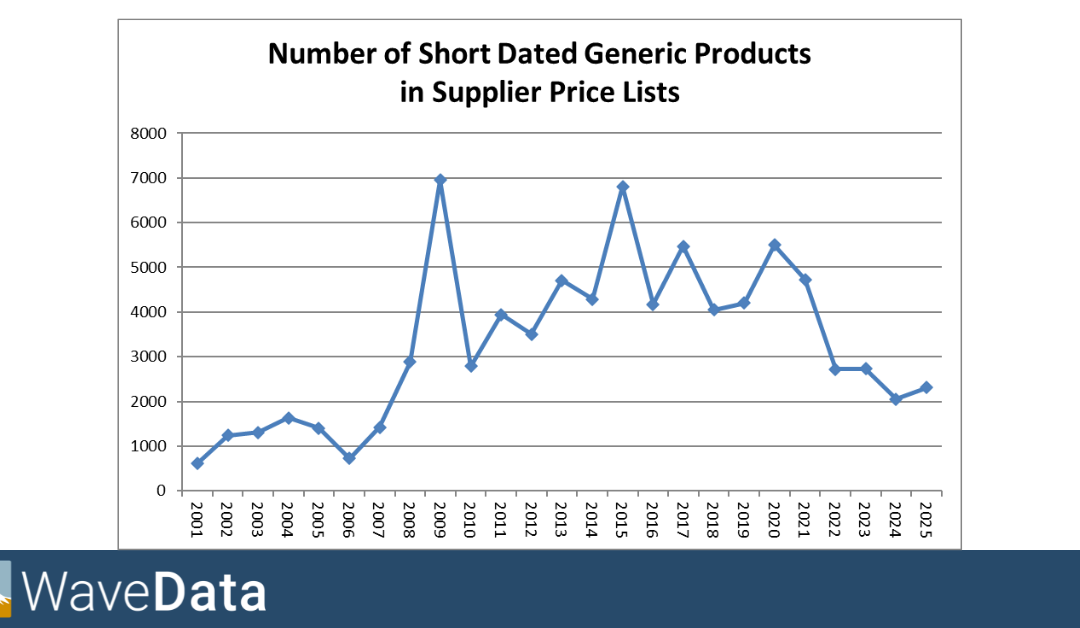
Charles Joynson, WaveData MD undertakes some analysis on short dated products.
When a product is in seriously short supply, Pharmacies will get their hands on any stock they can to satisfy their customers. This sometimes means that they have to get short dated stock. If they have no long dated alternative, short dated will have to do. The presence of short dated stock in the market gives us a clue about the availability or shortage of that particular product.
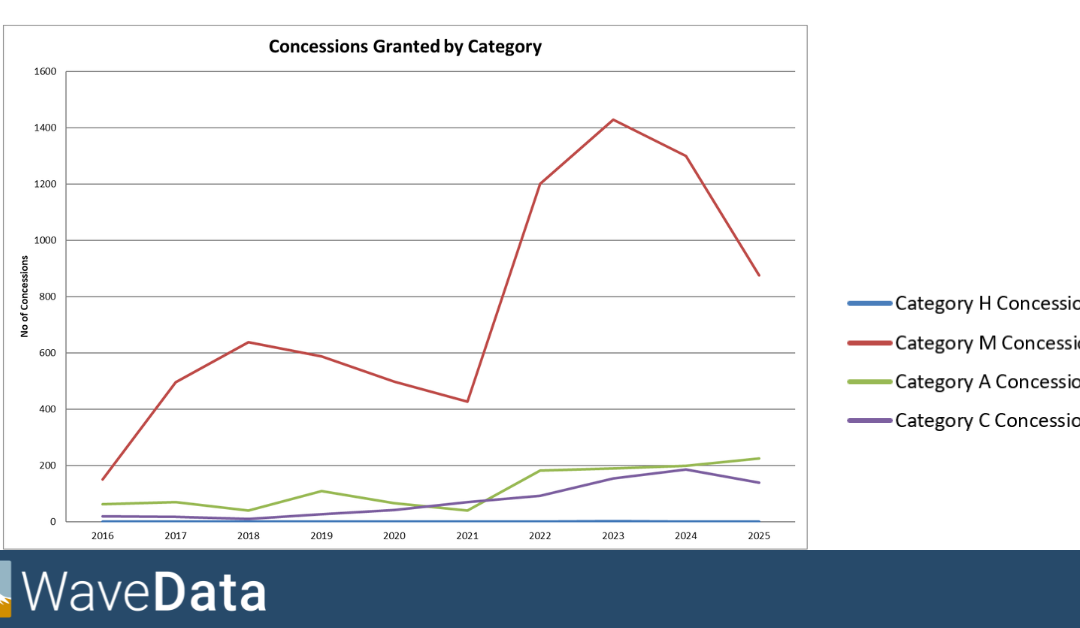
Concessions granted by year and by category
Here at WaveData we keep a close eye on the number of concessions granted to individual products each month and have been doing so since they were launched in November 2010. We have always assumed the Category M is the primary source of concessions and of the linked shortages, but this month Charles Joynson, WaveData MD, has taken a closer look to see if this is correct.
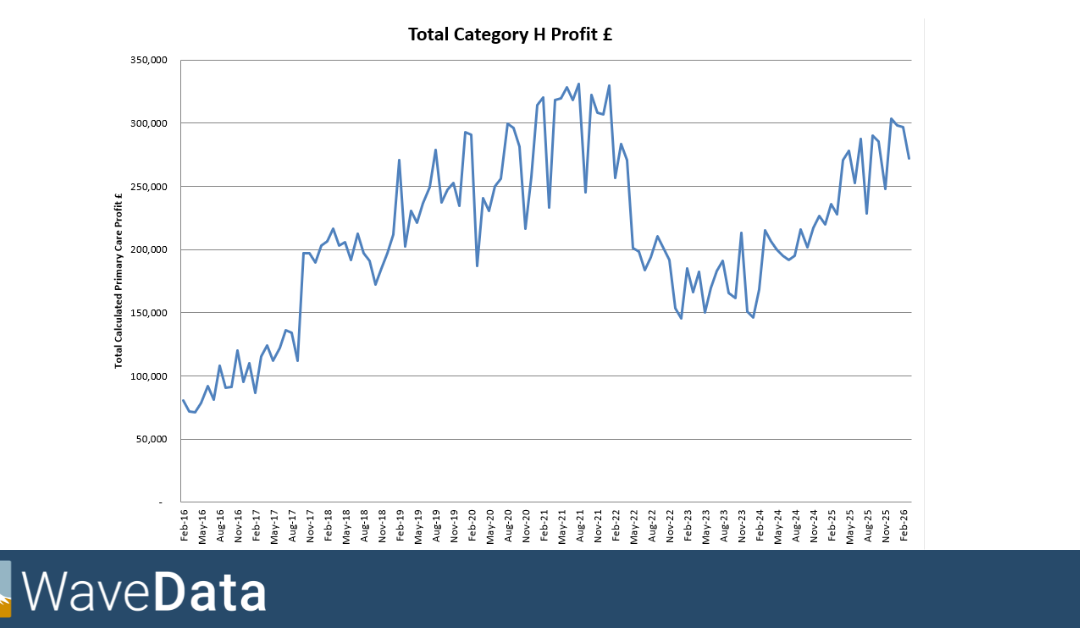
Category H Profitability Analysis
There has been a lot of discussion about Category H at recent events, online and on socials.
Charles Joynson, WaveData MD, poses the question; ‘Will it cut another group of generics to the bone and seriously damaged pharmacy and supplier profitability? Or will it increase profitability for the supply chain?’
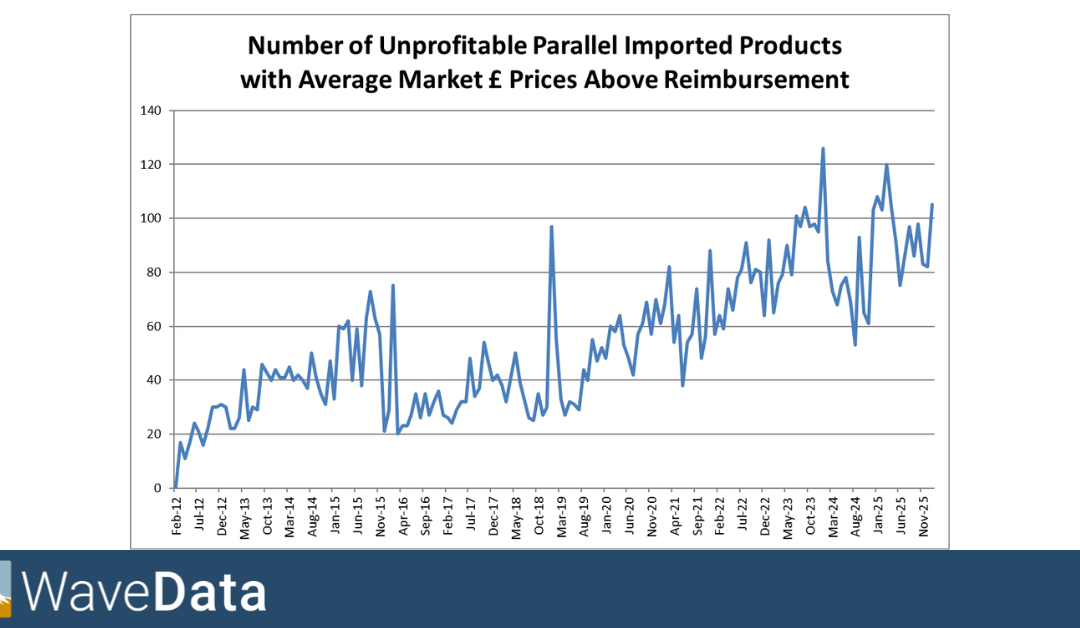
Are Parallel Imports Profitable for Pharmacies?
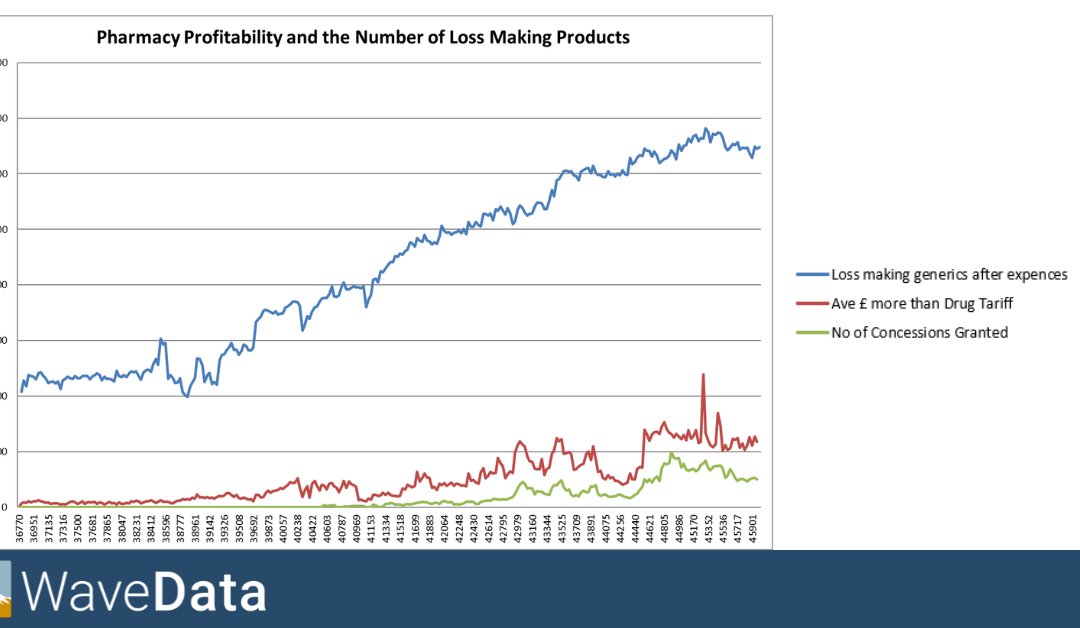
We know that pharmacies buying generics are making a loss when they dispense. Previous analysis, available on the Wavedata.co.uk articles page, shows that over 1200 generic products each month are unprofitable.
However, what about parallel imports, are they profitable products for pharmacies to dispense or are pharmacies losing money with these as well?
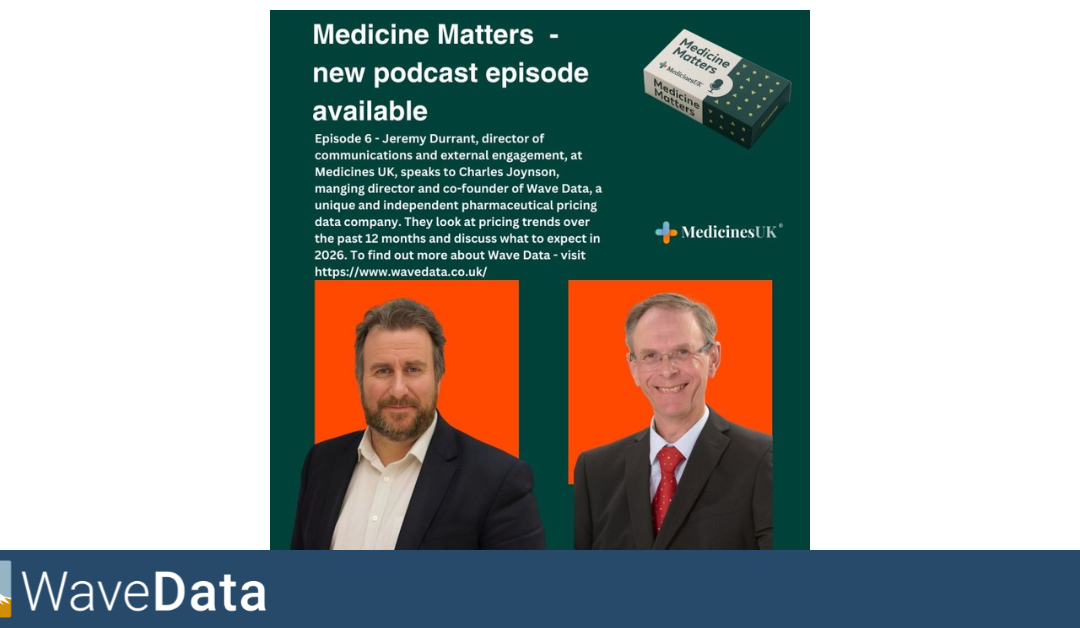
Medicine Matters Podcast Episode 6
Charles Joynson, WaveData MD, was delighted to join Jeremy Durrant, Director of Communications and External Engagement at Medicines UK, in the latest episode of their podcast Medicine Matters.
House of Lords Public Services Committee on Shortages
The House of Lords Public Services Committee has published its report concluding its medicines security inquiry. They argued that it is vital that the UK has strong, resilient medicine supply chains and emphasised the need for clear, proactive leadership. The report...
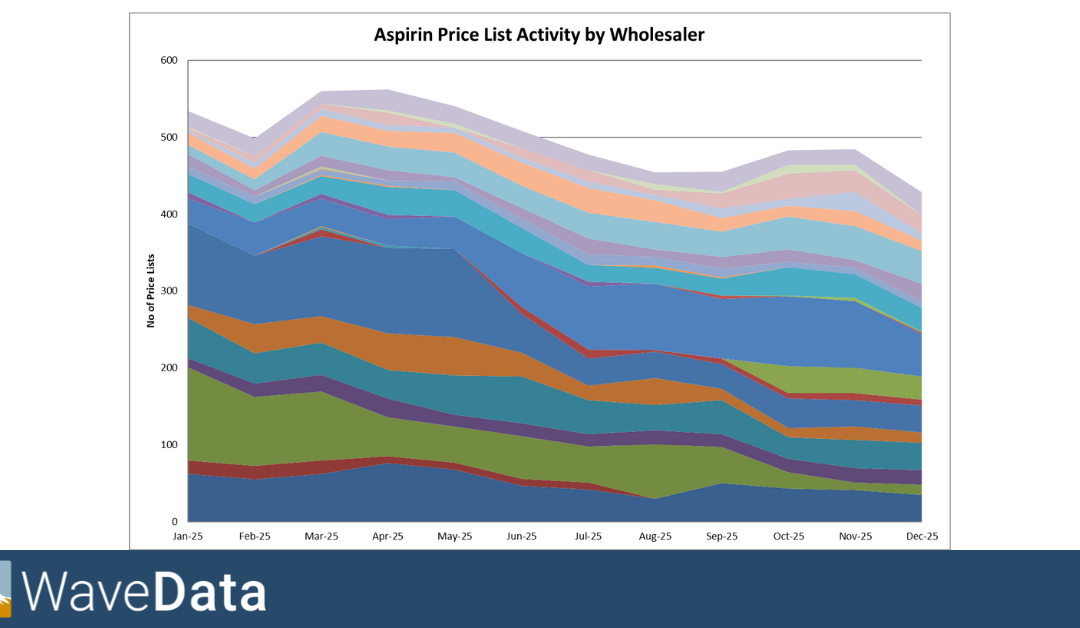
Charles Joynson comments on Aspirin supply disruption
Aspirin has been added to the government’s ‘No Export’ list and to the list of concessions meant to help pharmacies break even when they dispense this hard to get product. Prices are rising in the UK market, so we thought we’d have a look at the longer term, specifically drilling into the wholesale activity and the number of times they list Aspirin packs to their price lists.
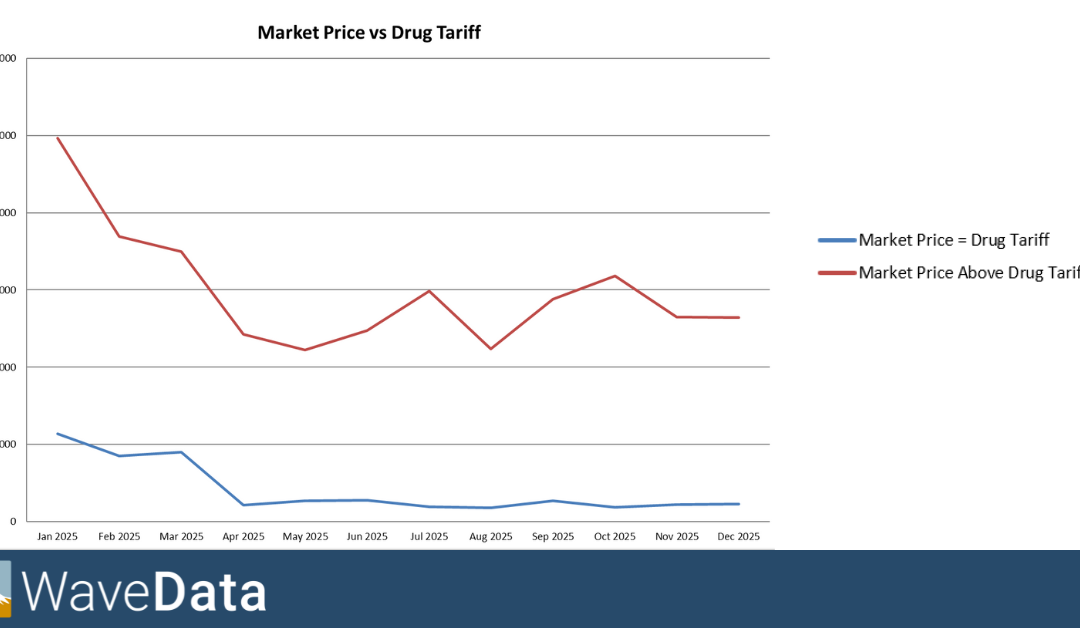
Generic Market Prices versus the Drug Tariff
To start the year off with a bang, we thought we’d compare the generic product prices we get from our Pharmacy and Dispensing Doctor data suppliers with the Drug Tariff for each product.
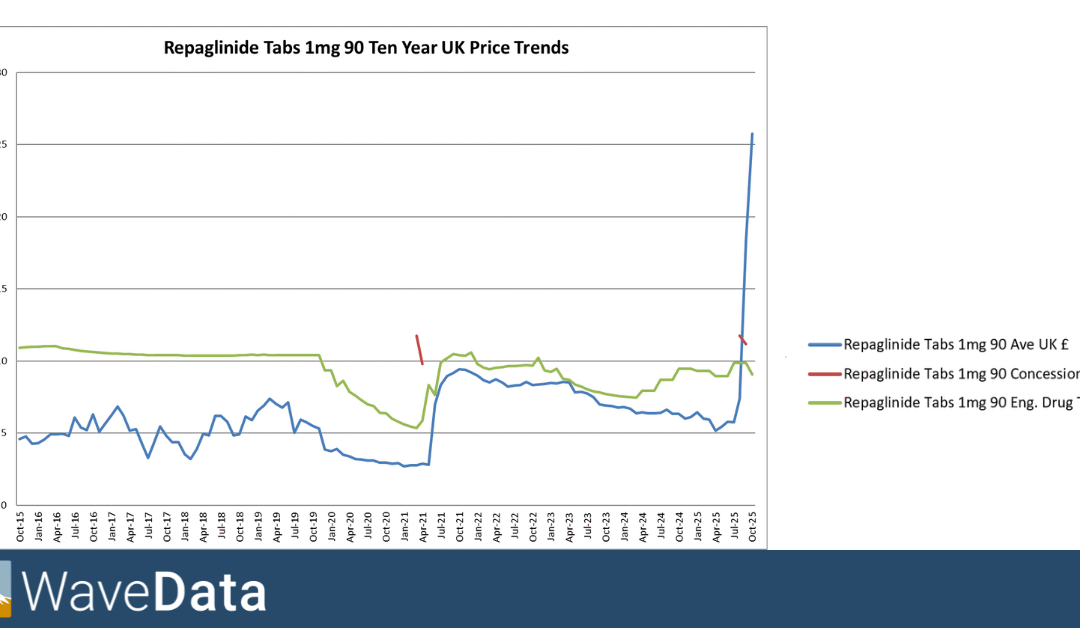
Charles Joynson shares some good news for diabetic patients and pharmacies.
Repaglinide is an oral antihyperglycemic agent used for the treatment of non-insulin-dependent diabetes mellitus.
The average market price for this medicine normally hovers around the £5 mark but in late 2019 the drug tariff started to come down from over £10.42 toward £5.47 by February 2021.

Generics Bulletin, UK Price Watch September
Check out the latest UK Price Watch article in the Generics Bulletin for analysis and insight on September’s product launches, the biggest risers, the biggest fallers and the fastest movers…. with market data provided by WaveData.

A look back at NHS Reorganisations
At last week’s EMIG Quarterly meeting Donal Markey, Assistant director of Programmes, Transformation and Performance, said that the Irish health service had been reorganised just once while England’s NHS had been reorganised 7 times.
As we are in our Silver Anniversary year and nostalgically looking back over our business, we thought a look back over the major NHS reorganisations would be interesting. Here Charles Joynson highlights the key shifts in governance, structure and ideology.

Squeezing profitability till the pips squeak with Ibuprofen Tabs 600mg 84s
There seem to be a number of things going on with this product in the long-term. The first thing we can see is that market prices rose dramatically to April 2020 at which point a Concession was announced and an increase in the Drug Tariff introduced fairly shortly afterwards.

Charles Joynson, WaveData MD, attended this month’s EMIG Quarterly meeting, loaded with interesting content like traversing stepping stones to reach the NHS of the future.
Leslie Galloway, EMIG Chairman, shared his analysis of VPAG. Here’s Charles’ key takeaways:
· The NHS VPAG rebate is £1bn over 3 years and so is a fixed rebate with risk share.
· Global Pharma CEOs have asked for lower rebates and a better deal, that has not been accepted by the NHS so the current situation is a no deal stalemate.
· Leslie thinks the rebate should be capped not fixed, which would allow for forecasting and budgetary flexibility.

How badly are pharmacists being squeezed on generics?
Charles Joynson, WaveData MD, decided to have a look at the differences between the average market price for generics and the English drug tariff. He wanted to know if the gap between the two was being squeezed, resulting in some of the misery pharmacists are going through at the moment.

When does unprofitability turn into a serious shortage?
Four times over the last 10 years, free market competition between the manufacturers of Olanzapine tablets drove the price to a level where profit was impossible and withdrawal is the only option.

Olanzapine Tabs on a Hair Trigger
Over the last 10 years Olanzapine tablets have suffered four shortages along with price spikes and concessions. The most severe of these was in 2017 when prices for the 20mg 28 tablet pack went up as high as £115 on something that normally sells for £2.

The Birth and Death of Parallel Imported Isotrex Gel 0.05%
Isotrex Gel 0.05% was first launched in the UK by Stiefel Laboratories Ltd on 10 November 2002. It was primarily used to treat acne vulgaris in adolescents and contained isotretinoin, a compound similar to Vitamin A. The first parallel import appeared in the UK in July 2005, which means that this product had 2 1/2 year honeymoon period without serious competition.

As we celebrate 25 years of WaveData, here’s our story…..
It was a crazy idea, that generic manufacturers would be able to monitor each other’s sales prices.
Back in 1999, when Charles Joynson was working in the Business Information department at Baker Norton, he was tasked with acquiring some competitor Pharmacy Price Lists. The business, and its parent company Norton Healthcare (later Ivax and even later Teva) wanted to find out what their competitors were selling out at.
Generics Bulletin Price Watch July 2025
Check out the latest UK Price Watch article in the Generics Bulletin for analysis and insight on May’s product launches, the biggest risers, the biggest fallers and the fastest movers…. with market data provided by WaveData.
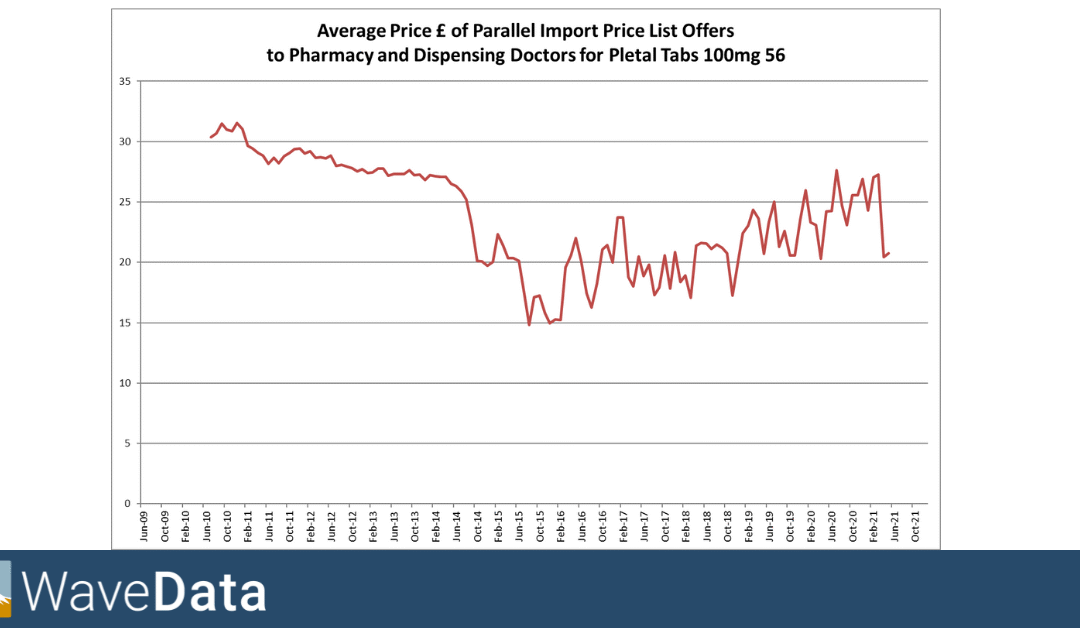
A Parallel Import Life Cycle of Two Halves
Today we thought we’d have a look at Pletal (Cilostazol) for which we can see the appearance and disappearance of parallel imports in the UK. Pletal was first launched into the UK in 2007 and is used for the treatment of intermittent claudication, a condition associated with leg pain and poor circulation. The first sign of parallel imports was in September 2009 with a single data point, which may have been importers testing the market for the first time.
Follow us: